About Hasroun
Hasroun
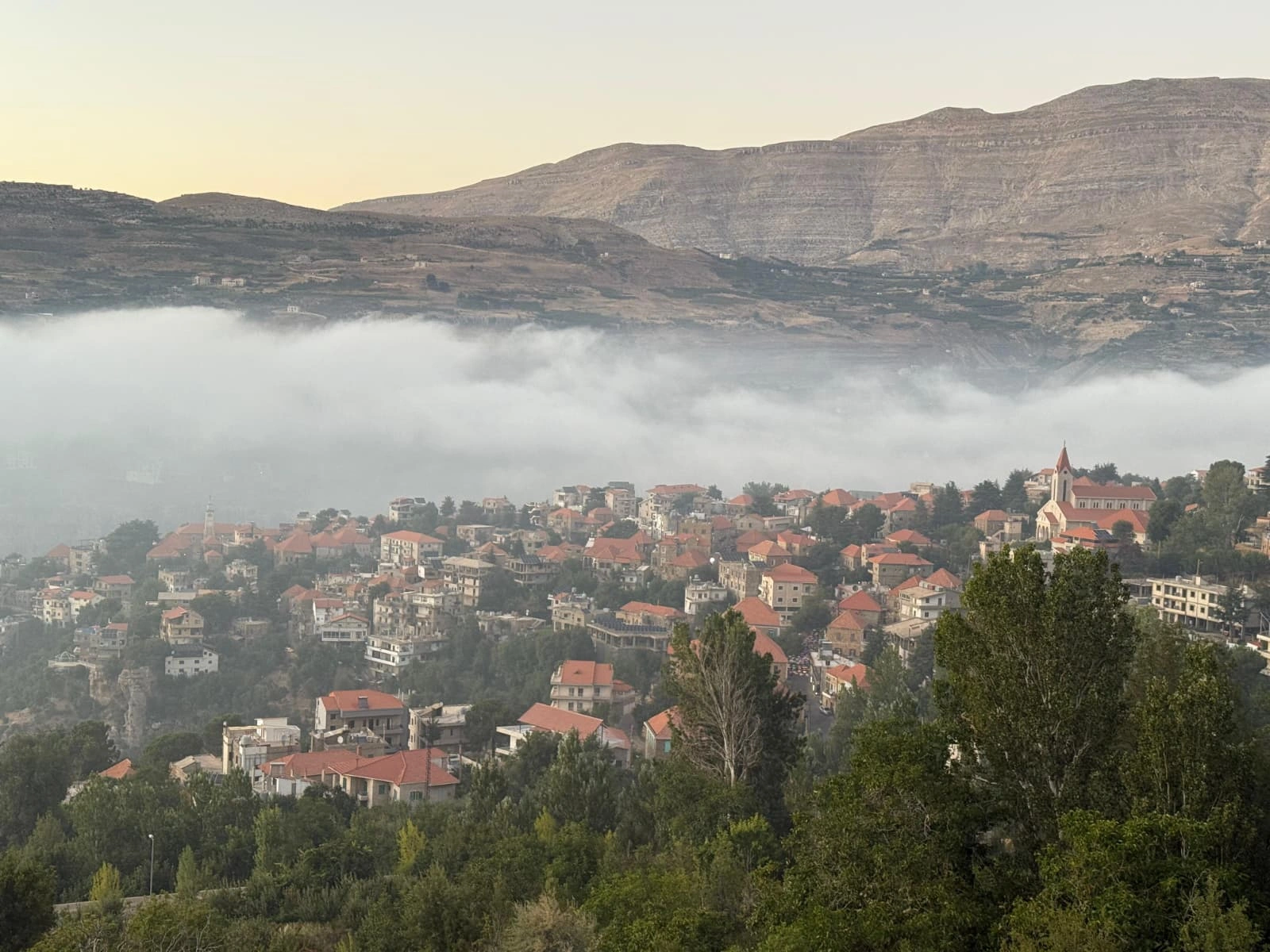
Origin of name: Phoenician meaning “fortress”. It is also known as “The Rose of the Mountain” due to its offering as one of the most scenic mountain villages. Hasroun is instantly recognisable for its traditional red-tiled rooftops, limestone homes and mountain terraces perched atop the cliffs.
Location & Setting
Where is Hasroun?
Located in the Bsharri District, it is part of the North Governorate. Hasroun overlooks the sacred Qannoubine Valley. Its elevation is approx. 1,420–1,600m above sea level. Distance from Beirut: around 100–105 km. In the winter seasons around 2,000 residents live in Hasroun; however in the summer, this increases to 5,000+ residents. It’s deeply rooted in Maronite Catholic history, and close proximity to ancient monastic sites. “Rose of the Mountain” More than just a nickname.
Known for its thousands of red-tiled rooftops, it is also linked to a native “Hasroun flower” once common in the area. From afar, the village looks like a cluster of roses across the mountains. Described historically as a “bouquet of roses”- a symbol of natural beauty and mountain life. Hasroun is also renowned for its annual Flower Festival, which reflects the village’s vibrant identity and strong pride its residents have in preserving Hasroun’s culture and beauty.
Religious Influence
A deeply spiritual village. As a strong Maronite Catholic community, its home to many churches, including:
St. Jude (Leba) Church (patron saint of Hasroun)
Our Lady (Saydeh) Church
St. Anne (Hane) Church
and other small shrine churches dedicated to saints Michael and Jacob (Yaccoub) that date back to the 8th century. Hasroun is proudly located near the Maronite Patriarchate in Diman. Hasroun has famously produced two Maronite Patriarchs.
The 4 Founding Fathers
Historically, the village was made up of four families, sons of Chahine Al Mashrouky:
Aouad (or Awad) family
Semaani (Al-Semaani) family
Afritty family
Hourani family
From these families came the many names, branches and households that have since grown and continued to give life to Hasroun. Though these family names may differ today, so many of us remain connected through these shared roots and village history that binds us together.
Scenic Experience
Hasroun’s high altitude gives it cool summers, snowy winters and breathtaking views all year-round. Visitors to Hasroun enjoy: scenic hiking trails, snow during winter months, fresh water springs, cafes and dining options and even hotel choices; while having close access to the neighbouring Cedars of God and Saint Charbel’s Monastery in Bkaakafra (hometown of Saint Charbel). With stunning sunsets over the valley, Hasroun is a destination for relaxation, tourism and connecting with nature.
Diaspora
Like many mountain villages in northern Lebanon, a significant proportion of people with roots in Hasroun now live overseas rather than permanently in the village itself. Hasroun has a very large diaspora community, particularly in Australia. Hasrouni families have established strong communities, particularly in Sydney and Melbourne. Maronite Catholic Parishes have became a central gathering point for maintaining identity and village ties.
“Hasroun is not simply a village we come from: it is a memory carried in the heart, where faith, family and foundations remain forever.”